
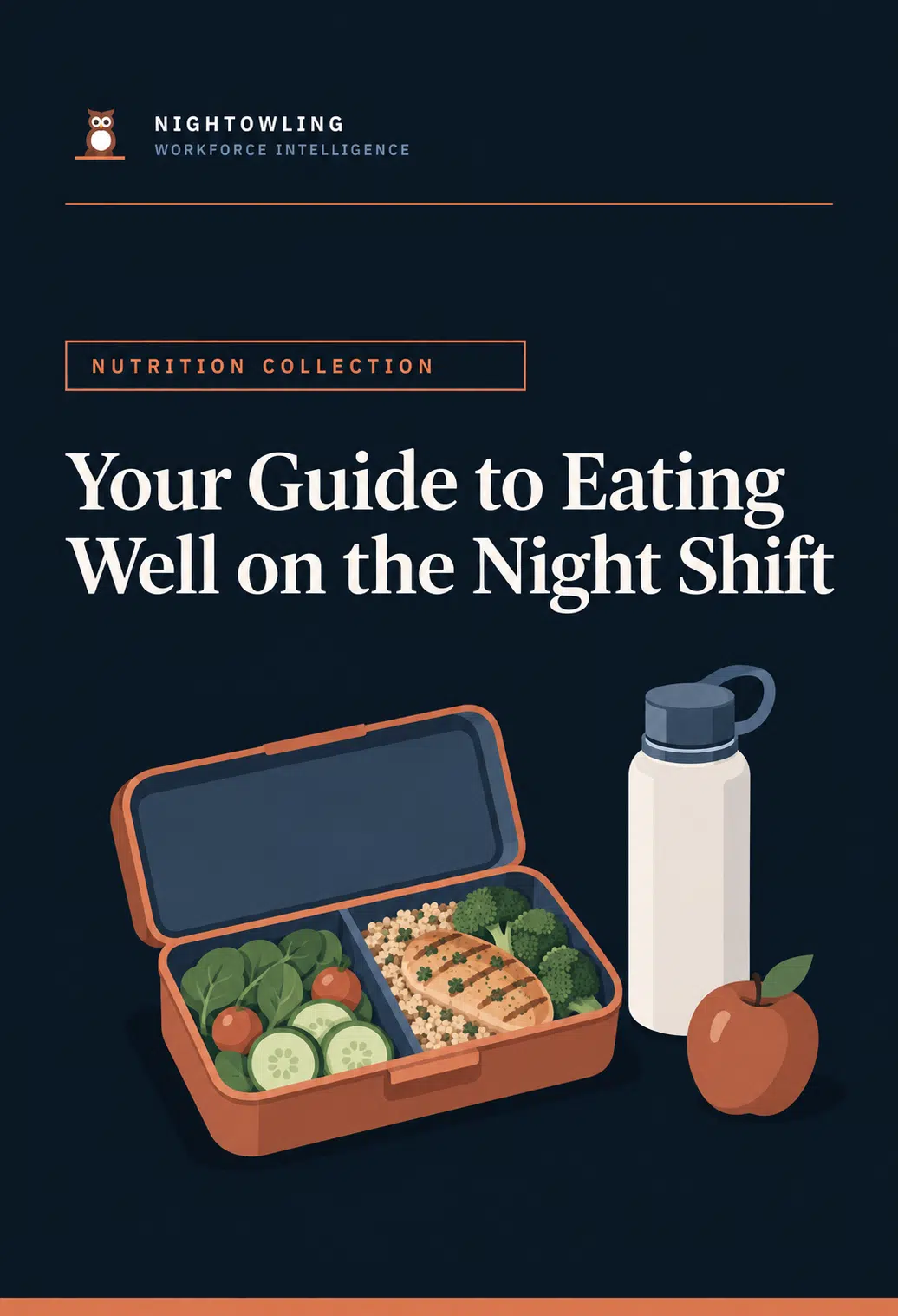
Your Guide to Eating Well on the Night Shift
A practical worker guide for planning meals, snacks, hydration, and backup food around the hours, hunger, workload, and options available on real shifts.
A night shift eating guide with a plan you can reuse
Choose meals and snacks around the full time you are awake, the breaks you can actually take, and the food you can store or obtain. This night shift eating guide helps you build that pattern, prepare a backup, and use the Food Plan worksheet to test what holds up across several shifts.
Inside this resource
- 13 sections
- Night Shift Food Plan worksheet
- Roster-specific starting patterns
This guide helps you choose a dependable earlier meal, decide what overnight eating needs to do, and prepare food that remains usable during your shift. Across 13 sections, it connects meals and snacks with hydration, digestive comfort, roster changes, and the next sleep period.
The included Night Shift Food Plan worksheet brings those decisions together. Start with the conditions you actually have, test one change across several comparable shifts, and keep what makes eating more manageable.
What this guide to eating well covers
Map the whole waking day
Work from waking, duty, real break opportunities, travel, and your planned main sleep. Place a dependable meal after waking or before work where feasible, and consider whether splitting it would help when appetite or time is limited.
Choose food and amounts that fit the shift
Distinguish a main meal, smaller meal, snack, and unopened backup. Build combinations from familiar protein foods, produce, grains or other starchy staples, and satisfying additions. The guide includes options such as yogurt with oats, hummus with bread or vegetables, and beans with rice, while leaving room for different cuisines and preferences.
Prepare for changes in timing and access
Adapt the pattern for fixed nights, rotation, consecutive shifts, occasional nights, extended duty, and physical work. Use ready components, divided portions, cold options, or safely stored backups according to the facilities available. Include the final part of the shift and the journey home in the plan.
Troubleshoot and review the pattern
Consider hydration, uncomfortable fullness, reflux, late hunger, grazing, and plans that collapse after the first night. The guide explains how to test one adjustment, when personal nutrition advice matters, and when repeated access or break failures need to be raised at work.
The Night Shift Food Plan worksheet
The worksheet has six steps, grouped across two parts. It starts with your actual routine and ends with one change to test. Use it before a run of shifts, then return to the decisions that did not hold up.
- Map the day and place a dependable meal: Record waking, duty, main sleep, scheduled versus usual breaks, work demands, and the meal you can reasonably count on.
- Plan overnight food and the way home: Choose the amount and likely eating opportunity, carry an optional extra, and decide how you will handle hunger or fullness after work.
- Check access and test one change: Record storage, reheating, a backup, and water access. Name one recurring difficulty and how you will judge the next adjustment across comparable shifts.
A useful backup solves a specific problem
Packing extra food can help when the shift runs long or the cafeteria closes early. The choice should match the failure you expect. A meal needing a microwave is a weak backup when the usual problem is a queue. A perishable option needs reliable refrigeration or suitable cold storage for the time it will be carried.
The guide distinguishes food you intend to eat from food you can leave unopened if it is not needed. That lets you prepare for uncertainty without adding another compulsory eating time. Low-effort components and a few familiar combinations can make later nights easier to manage.
If the same break disappears repeatedly, note that pattern and raise the underlying coverage issue through the appropriate workplace route. A backup can cover an occasional disruption; dependable eating opportunities still require a work arrangement that holds up.
Questions about this guide
What are some meals or snacks I can take on night shift?
Start with foods you like and can store safely. Examples in the guide include a main meal assembled from a protein source, plant food, and grain or starchy staple, and smaller options such as yogurt with oats, hummus with vegetables or bread, or beans with rice. Choose the amount around hunger, work demands, and what you ate earlier rather than treating one snack as enough for every shift.
Does the guide include a fixed 12-hour night shift meal plan?
It includes starting patterns for common rosters and a worksheet for your own hours. It does not prescribe identical clock times or portions for everyone. For a suggested structure for one worknight, use the Night Shift Meal Plan Builder, then use the guide to review what happens across several shifts.
How can I plan food when I have no microwave or refrigerator?
Choose genuinely shelf-stable components or carry perishables in suitable insulated cold storage. The guide covers cold meals, ready components, food that can be divided across breaks, and backups. Follow the relevant food-safety instructions; a long shift does not make an unrefrigerated perishable meal safe.
Should I eat after work before going to sleep?
Use hunger and comfort to guide the decision. A small option may help when hunger would keep you awake; there is no need to add a meal solely because it is morning. NIOSH’s guidance for night workers discusses a small meal before daytime sleep and avoiding a large meal close to that sleep period. Individual health needs and digestive symptoms may call for different advice.
Is this a weight-loss diet or an individualized nutrition plan?
No. The guide focuses on enough nourishment, manageable hunger, comfort, and a pattern that fits the work cycle. It does not provide calorie targets or promise weight loss. A registered dietitian or clinician should guide changes when medication, a medical condition, pregnancy, or an eating-disorder history affects your needs.
Read the full guide
Get the full guide and Food Plan worksheet to build, test, and adjust your eating pattern around real shifts and food options.
Bring NightOwling to your workplace
Share NightOwling with your manager or HR team to explore support for your night shift colleagues.
