Knowing how much to contribute — and what the limits are — can make or break your retirement plan. In this video, HR expert Carrie Nelson explains how to set a realistic savings budget, start small, and grow your contributions over time.
You’ll learn how to take advantage of employer plans, understand annual IRS contribution limits, and use age-based “catch-up” rules to maximize your savings potential. Whether you’re early in your career or approaching retirement, this guide helps you plan smarter and stay within the rules while building long-term financial security.
Watch now to learn how to balance your budget, increase your savings, and keep your retirement goals on track.
0:00
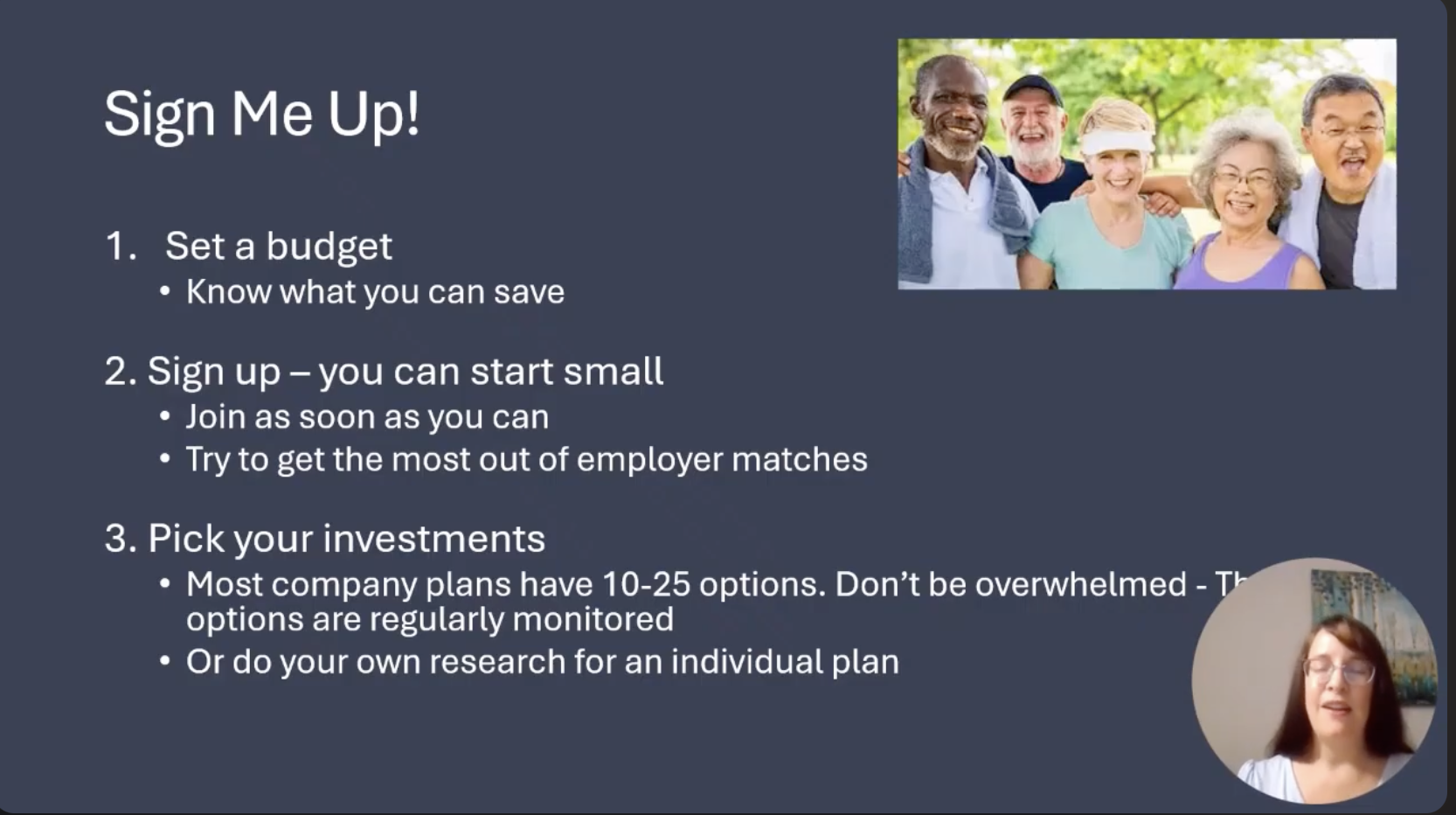
Well, set a budget. What's right for
0:02
you? You can start really small. So, $5
0:05
a day, even if it's $10 or $20 a week. I
0:08
encourage you to get started. Just start
0:10
putting it in. Watch the money compound
0:12
over time, and it'll motivate you to do
0:15
even more. Sign up. If you have an
0:17
employer plan, sign up right away. You
0:19
can usually sign up anytime if you're
0:21
eligible. If not, you know, look into
0:24
your own plan.
0:26
One thing you'll need to think about is
0:27
picking your own investments. So most
0:30
companies if you have a company
0:32
sponsored plan they'll have about 10 to
0:33
25 options but again like I said if you
0:36
do your own research do that Erade and
0:38
merit trade look Google things you'll
0:40
have a much wider variety of options.
0:45
Before I get into those options I did
0:47
want to talk about for company plans you
0:49
will have a limit. These are IRS rules.
0:52
So the standard employee contribution
0:55
for next year in 2026, we're there
0:58
already. Uh is expected to be 24,500.
1:03
So it means you can't contribute more
1:05
than that in an entire year. If you do,
1:08
you get it taken back. The IRS only lets
1:11
you do that pre-tax to a certain amount.
1:14
However, if you're over 50, they let you
1:15
contribute a little more. And it's uh
1:18
estimated to be 32,500 as a cap. And
1:22
there's a brand new rule uh for people
1:24
who are 60 to 63 for a super catchup.
1:28
And those people can contribute even
1:31
more to a maximum of 35,750.
1:35
It might seem like a lot, but actually
1:37
as you're nearing retirement, people
1:40
tend to contribute more and more because
1:42
they want to save as much as possible.
1:44
So just keep that in mind.